Why India's Rupee Low Isn't Just 'Sentiment' - Redditors Anxious
8|0 comments
India's Market Mirage: Highs in Rupees, Lows in Dollars?
Market Highs and Currency Woes The Indian markets presented a mixed bag on December 1, 2025, a day of apparent contradictions. The Sensex closed at 85,641.90, down 64.77 points or 0.08%, while the Nifty ended at 26,175.75, down 27.20 points or 0.10%. Both indices retreated from intraday record highs, marking the second consecutive negative session. But the Nifty 50 *did* open around 26,325, marking a fresh lifetime high before its end-of-day dip. So, which is it? A roaring market or a faltering one? Meanwhile, the rupee tumbled to a fresh all-time low, falling past 89.49 against the U.S. dollar. It opened slightly stronger at 89.44 per dollar, compared with Friday’s close of 89.46, before its slide. The RBI likely intervened to support the weakening rupee as it neared the 90 mark, a move that suggests underlying concerns about the currency's stability. This divergence—market indices hitting new highs while the rupee plummets—demands a closer look. Are these isolated incidents, or do they point to a deeper disconnect within the Indian economy? And what are the implications for investors?Sectoral Shifts, Divestments, and Rate Cut Speculation
Parsing the Data: Gainers, Losers, and Government Moves A look at the top Nifty gainers and losers provides some clues. UltraTech Cement, Tata Motors PV, Maruti Suzuki, Bharat Electronics, and Eicher Motors led the gains, while Max Healthcare, InterGlobe Aviation, Bajaj Finance, Sun Pharma, and Adani Enterprises faced the biggest losses. This suggests a sectoral rotation, with investors favoring traditional manufacturing and automotive stocks over healthcare, aviation, and finance. Market Highlights: Sensex settles 65 pts lower after choppy session, Nifty flat; TMPV rises 2%, Bajaj Fin... - The Economic Times The government's plan to divest up to 6% stake in Bank of Maharashtra through an Offer for Sale (OFS) is another factor to consider. At the current market price, the government aims to garner about Rs 2,600 crore. The offer opens for Non-Retail investors on Tuesday, and Retail investors can bid on Wednesday. This move could inject liquidity into the market but also puts pressure on the stock price of Bank of Maharashtra. (It's worth noting that the success of OFS offerings can be highly dependent on market sentiment.) Adding to the complexity, Bank of America Global Research expects the U.S. Federal Reserve to cut interest rates by 25 basis points at its December meeting, while HSBC Global Investment Research forecasts that the RBI will lower rates by 25 bp in its December 5 MPC meeting, bringing the policy repo rate down to 5.25%. These expected rate cuts could influence capital flows and market valuations.Commodities, Corporate Actions, and Economic Earthquakes
Commodities and Corporate Actions Commodity markets also saw notable movements. Crude oil prices climbed Rs 55 to Rs 5,379 per barrel in futures trade. Copper futures slipped by Rs 9.30 to Rs 1,045 per kilogram. Gold February futures were trading at Rs 1,30,383 per 10 grams, up Rs 879 or 0.68%, and Silver March futures jumped to a fresh high of Rs 1,78,620 per kg, rising Rs 3,639. These fluctuations reflect global economic uncertainties and investor appetite for safe-haven assets. Several corporate actions are also noteworthy. Reliance Industries announced that Star Television Productions merged with Jiostar effective November 30, 2025. Nvidia invested $2 billion in Synopsys common stock at a purchase price of $414.79 per share. Anil Ambani moved the Supreme Court challenging SBI's classification of his account as fraud. India’s current account deficit narrowed to $12.3 billion in Q2 (July-September), or 1.3% of GDP. India’s total Gold ETF AUM crossed Rs 1 lakh crore in October 2025. Dreamfolks acquired a 60.24% stake in Easy to Travel, a Dubai-based airport services distribution platform. Sterling and Wilson Renewable Energy Ltd (SWREL) secured an order valued at about Rs 1,400 crore from Adani Green Energy in Gujarat. Sebi is set to end P-Note secrecy with mandatory NSDL registration for ODI investors. And the Shapoorji Pallonji Group is in discussions to raise ₹25,000 crore via two-year, unlisted, unrated non-convertible debentures. These events, while seemingly disparate, collectively paint a picture of an economy undergoing significant structural changes. The question is, are these changes sustainable? And how will they impact the average investor?Auto Sales Surge, IPOs Questioned: A Conflicted Market?
Auto Sales and IPOs: A Glimpse into Consumer Confidence Auto sales data for November 2025 reveals robust growth across several segments. Royal Enfield sales rose 22% YoY to 1,00,670 units. Hyundai Motor India posted a 9% year-on-year rise in total sales, reaching 66,840 units. Tata Motors CV total sales were up 29% YoY. TVS Motor logged 29.5% YoY growth in November. Atul Auto reported 20.3% YoY growth, with total sales reaching 3,401 units. Ashok Leyland reported a 29% YoY rise in November, with total sales reaching 18,272 units. Mahindra & Mahindra SUV wholesales climbed 22% in November. VST Tillers Tractors said Nov total power tiller & tractor sales were at 5,166 units. Bajaj Auto's total domestic sales were up 3%. These figures suggest strong consumer demand, particularly in the automotive sector. But it’s important to remember that YoY comparisons can be misleading. We need to see a longer-term trend to confirm sustained growth. Investor interest is high ahead of the December 3–5 subscription window for Meesho, Aequs, and Vidya Wires IPOs. FPIs favored IPOs again, pumping $1.3 billion into the primary market in November. However, a BoB study reveals that only 26% of IPO funds are going to capex. (This is the part of the report that I find genuinely puzzling.) Where is the rest going? Share buybacks? Executive bonuses? The devil, as always, is in the details. A House Divided? The Indian market on December 1, 2025, was like a seesaw with a greased fulcrum. Highs in some sectors were offset by lows in others, and the weakening rupee cast a shadow over the overall picture. The auto sector's robust sales are encouraging, but the limited allocation of IPO funds to capex raises questions about long-term investment strategies. The government's divestment plans and expected interest rate cuts add further layers of complexity. Ultimately, the "real story" is one of uncertainty and transition. The Indian economy is navigating a complex landscape, and investors need to be discerning in their analysis. It's not enough to celebrate new highs; we must also acknowledge the underlying vulnerabilities. Numbers Without a Clear Narrative The data is a Rorschach test. You can see bullish momentum or bearish headwinds, depending on what you *want* to see. The rupee's weakness, coupled with the odd IPO allocation, suggests caution is warranted.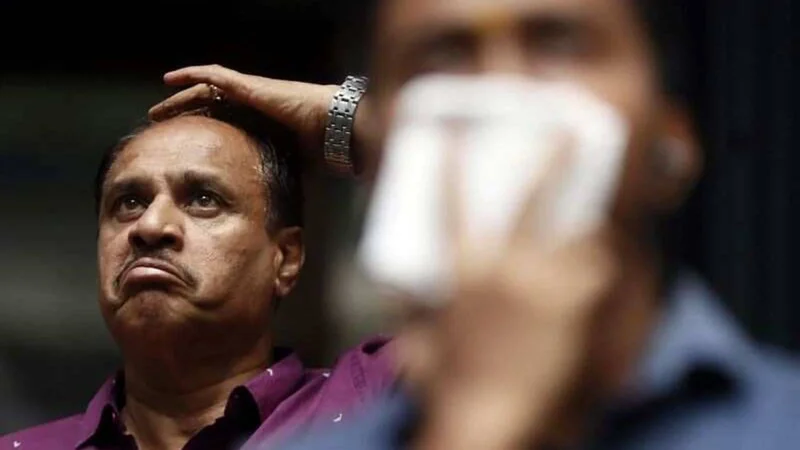

-
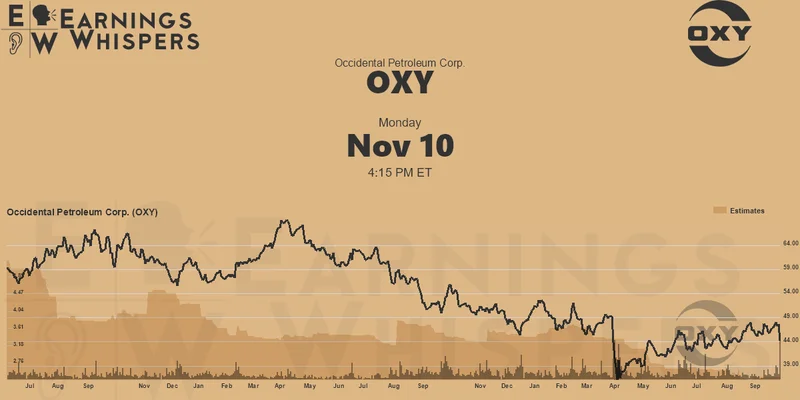
Warren Buffett's OXY Stock Play: The Latest Drama, Buffett's Angle, and Why You Shouldn't Believe the Hype
Solet'sgetthisstraight.Occide...
-

The Great Up-Leveling: What's Happening Now and How We Step Up
Haveyoueverfeltlikeyou'redri...
-
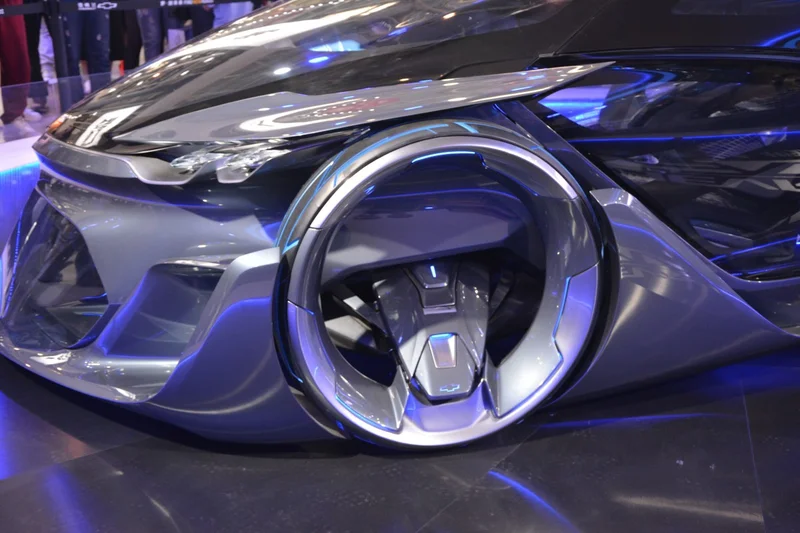
The Future of Auto Parts: How to Find Any Part Instantly and What Comes Next
Walkintoany`autoparts`store—a...
-

Applied Digital (APLD) Stock: Analyzing the Surge, Analyst Targets, and Its Real Valuation
AppliedDigital'sParabolicRise:...
-

Analyzing Robinhood: What the New Gold Card Means for its 2025 Stock Price
Robinhood's$123BillionBet:IsT...
- Search
- Recently Published
-
- DeFi's 2025: Unveiling Post-Crash Investor Breakthroughs - Mind-Blown Reactions
- Fake Stability: The Truth About Crypto Market Analysis (r/Crypto)
- S&P 500 Faces AI 'Air Pocket' in 2026: What the Data Really Says for Future Returns
- DeFi Token Performance Post-October Crash: Unlocking the Next Era of Innovation and Growth for Investors
- Why DeFi's 2025 Rebound Redefines Everything. - Reddit's Take
- Pink Pineapple: The Sweet New Paradigm of Taste - Internet's Juicy Take
- Why India's Rupee Low Isn't Just 'Sentiment' - Redditors Anxious
- Fintech 2025: What 'Innovation,' 'Security,' and 'User Experience' Actually Mean
- S&P 500 & Dow Rise, Nasdaq Snaps 7-Month Win Streak: Navigating the Rocky Close and Charting Our Next Breakthrough
- Crypto Market Analysis: Who's Really Managing Risk? - Crypto Debate Ignites
- Tag list
-
- Blockchain (11)
- Decentralization (5)
- Smart Contracts (4)
- Cryptocurrency (26)
- DeFi (5)
- Bitcoin (31)
- Trump (5)
- Ethereum (8)
- Pudgy Penguins (6)
- NFT (5)
- Solana (5)
- cryptocurrency (6)
- bitcoin (7)
- Plasma (5)
- Zcash (12)
- Aster (10)
- nbis stock (5)
- iren stock (5)
- crypto (7)
- ZKsync (5)
- irs stimulus checks 2025 (6)
- pi (6)
- hims stock (4)
- kimberly clark (5)
- uae (5)